A Case Study on Chamberlain Coffee: An Influencer Brand Done Mostly Right
This blog, including photos and reference links, is available on my Medium. The writing itself is available here for easy viewing.
Brands don’t just sell products. They sell an image and idea of the person you could become if you just had this one thing.
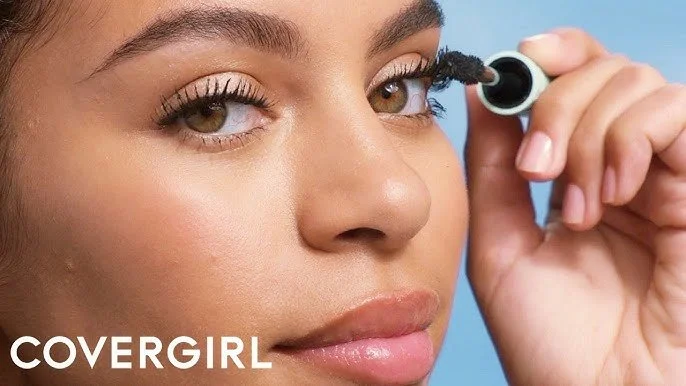
So when you open a magazine and see a CoverGirl ad, they’re not just selling you a mascara. What they’re selling you is the idea that if you buy this product, suddenly you’ll look good enough to be in a magazine.
Nothing makes that easier for brands to convince you of than recruiting celebrities and influencers to endorse their products. They’re attractive, recognizable, appear wealthy, and are admired by millions — all qualities the average person wishes they possessed.
More than that, they’re trusted.
A Nielsen “Trust in Advertising” study found that around 71% of consumers say they trust advertising, opinions, and product placements from influencers. Beyond that, a 2023 Matter Communications study found that 69% of consumers trust recommendations from influencers, friends, and family more than information coming directly from a brand.
And study after study shows that when kids grow up, they want to be just like their favorite influencer.
In 2010, 54% of UK teens said they’d rather become a celebrity than build a traditional career. Over a decade later, that hasn’t changed. When asked in 2023, 57% of Gen Z teens in America said they’d become an influencer if they had the chance — and 41% of adults felt the same way.
It’s not the concept of “celebrity” or being known that attracts them to what is arguably still a job, it’s the idea that being famous means they would automatically possess a suite of attributes they associate with that group of people — the looks, the money, the charisma, and more.
That high level of trust and consumer desire to become something greater sells products over and over again with no effort.
Enter Emma Chamberlain into the digital landscape.
After decades of glossy, overly filtered, hyper-perfect content on everything from our phones to our TV screens, 16-year-old Emma’s arrival on YouTube came as a breath of fresh air.
She was just different.
Most popular content creators at the time were her exact opposite. They were posting $500 MAC makeup hauls and showing off the new G-Wagon their parents just bought them. They were scripted, unapproachable, and unreachable. That worked for a time, but people grew tired of idolizing lifestyles that felt unattainable.
Within two years of starting her YouTube channel in 2016, Emma had amassed over eight million subscribers and become so successful she could buy her own home in Los Angeles — all by being relatable.
Instead of buying Gucci, she copied the $450 design with markers on a white t-shirt and made it herself. She drove around in her mom’s minivan to visit thrift stores and went undeniably viral doing simple things like posting a tutorial for her at-home iced latte recipe.
While some might call her the anti-influencer, I think that’s a bit of a misnomer. She had — and still has — plenty of influence. And Emma knows that too.
She’s definitely an influencer, but one that opted for natural rather than perfection. Her videos were authentic — playful, energetic, vulnerable — and made the “average” life of her audience suddenly seem worth watching.
Chamberlain Coffee: The ultimate brand-aligned influencer product
A lot of influencers and celebrities — and let’s just say that’s what Emma is at this point considering that she’s hosted the Met Gala more than once and been featured in publications like Architectural Digest — realize being in content isn’t enough and just go for the cash grab. They attach their name and likeness to a product that makes no sense to them, their brand, or their audience (like when Drake’s company OVO collabed with SMEG to make a luxury toaster).
Emma didn’t do that.
She stayed true to her roots and leveraged her audience’s trust to build a company around the very thing that helped define her brand and made her famous — at-home lattes. In 2019, she launched Chamberlain Coffee — a direct-to-consumer brand of organic coffee and matcha that you could make in the comfort of your own home.
Here’s why it was genius:
In a way, Emma Chamberlain herself was a direct-to-consumer product (if you consider influencers to be selling themselves), readily accessible in people’s homes by way of their phones, tablets, and laptop screens.
So it’s very fitting that Chamberlain Coffee started as an e-commerce brand.
But it wasn’t just that the product was brand aligned, which made it easy for people to accept that starting the company as a natural next step for Emma. What made the company concept genius is that there is a seemingly infinite market for the products she created, and not just with her own fanbase.
In 2025–2026, the global coffee market sits at around 176–186 billion USD and is projected to grow to roughly 239 billion by 2031. And relevant to Chamberlain Coffee, who sells several flavors of matcha powders, the global matcha market is expected to reach 9.12 billion USD by 2033.
And the majority of that market comes from North America, where Chamberlain Coffee is made and sold.
What’s not objectively clear from those statistics is where that coffee comes from. Yes, it all comes from brands, as no one is growing their own coffee beans at home. But most coffee consumption starts at home.
Ever since the pandemic, the vast majority of Americans prepare their average 2–3 cups of coffee a day at home as a way to cut costs. So Chamberlain Coffee introducing a line of coffee blends and matcha powder both in bags as well as instant and single-servings was the best way to reach the vast majority of consumers.
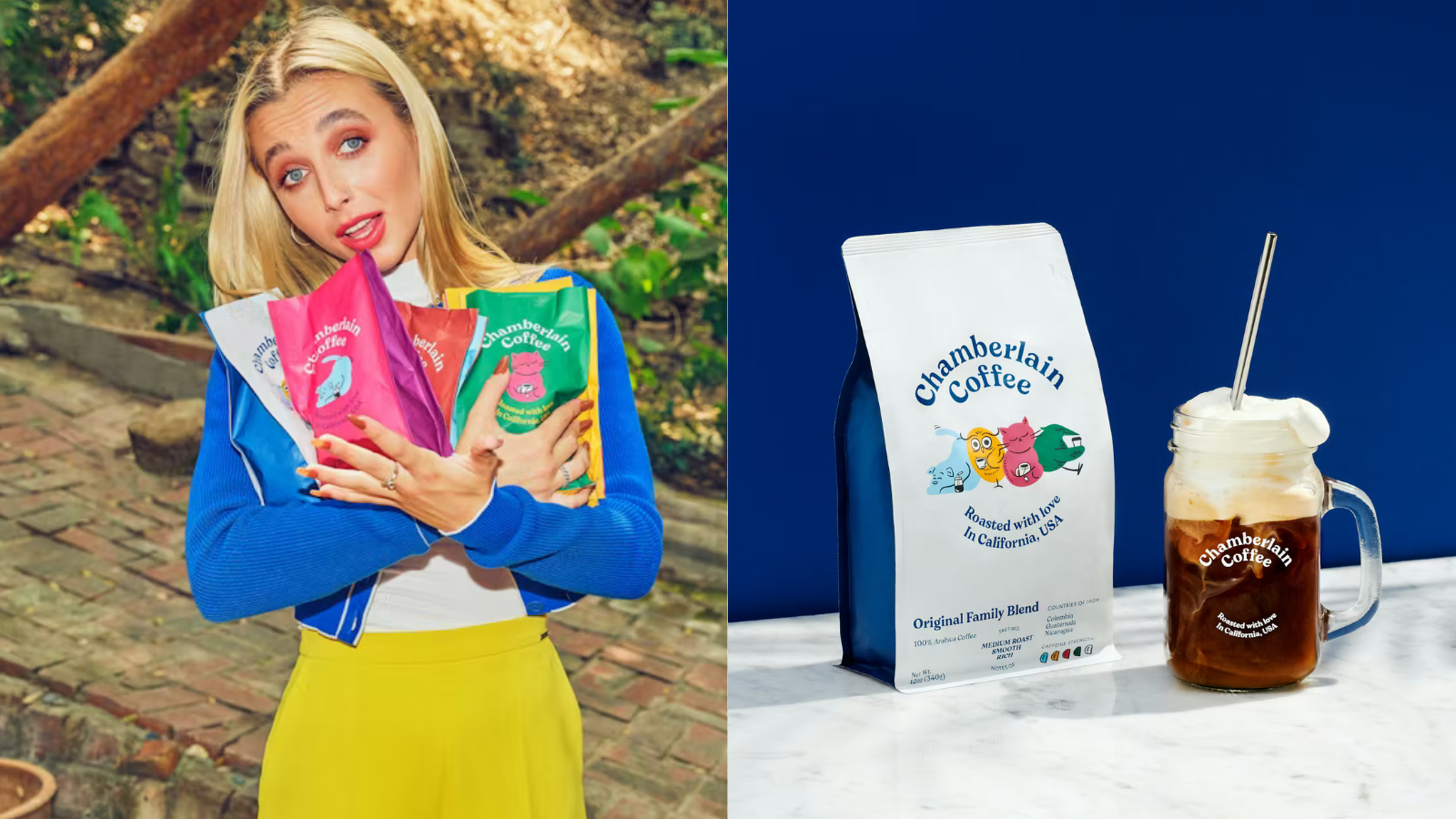
Images courtesy of Elite Daily
Chamberlain Coffee’s primary audience is the one Emma belongs to — Gen Z. Approximately 47% of Gen Z consumers drink coffee daily, often starting as early as age 15, and many prefer cold, sweet, and customized drinks.
The brand’s intended consumer isn’t just anyone — it’s Emma’s younger self.
And they’re willing to pay a high price for good lattes too. When asked about interest in a Chamberlain Coffee brick and mortar store coming to Venice in 2026, one USC student said, “I think I pay a lot for coffee regardless of where I’m going, regardless if it’s run by an influencer. But I really love Emma Chamberlain, so I would just go to check it out.”
So when you mixed high levels of trust and adoration for Emma and a market-ready product, it’s no surprise that the brand generated $1 million in sales within 30 minutes of its launch.
A High-Level View of Chamberlain Coffee
Chamberlain Coffee caters to those who see themselves as individuals first, maybe even hipsters. They want to see themselves as unique and different from other people, even if just by using a niche brand to get their caffeine fix rather than going to Starbucks like the average person might.
And their branding reflects that.
It’s quirky, colorful, and doesn’t take itself too seriously.
When you look at their packaging, you’ll see bright bold colors paired with cartoonlike illustrations of animals like crocodiles, sheep, birds, and bees. Standard product espresso and medium roast blends with monikers like “social dog” and “fancy mouse” and fun flavors like “strawberries and cream” and “chocolate raspberry”.
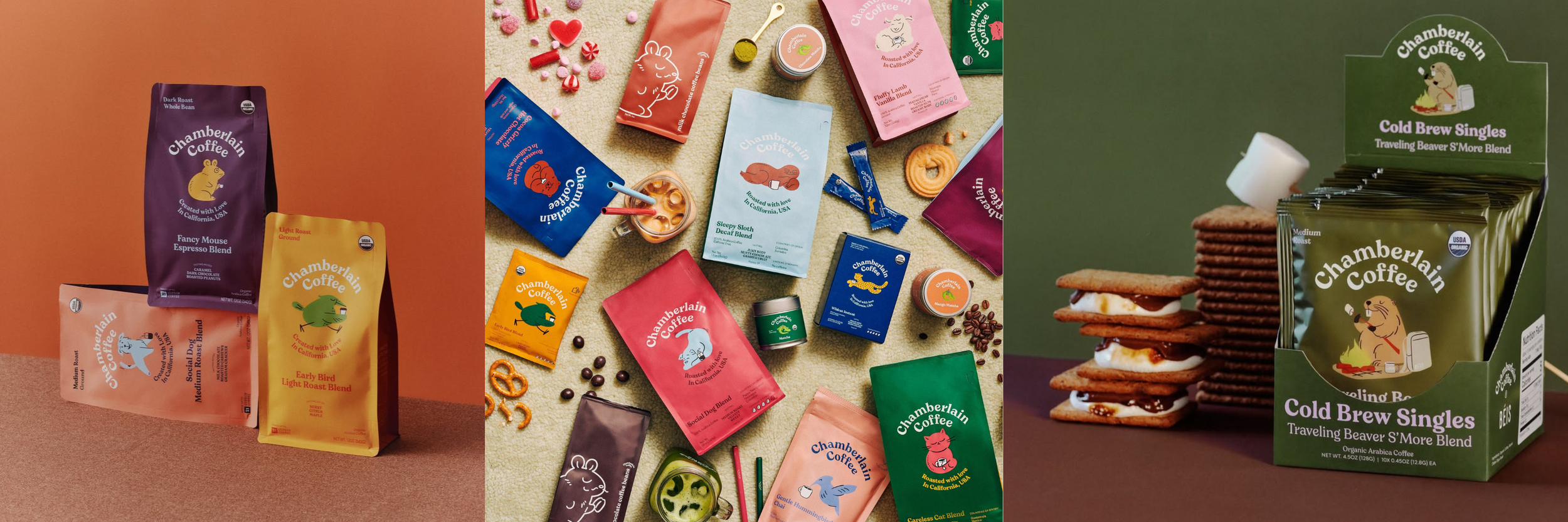
Images courtesy of Chamberlain Coffee
The brand is positioned to be as approachable as Emma’s content is to all her fans with its branding and its product placement. While the brand started off as e-commerce only, they’ve since expanded into major retailers like Whole Foods, Target, and Sprouts — all mid-tier level grocery stores that fans can easily access.
People have formed a relationship with the brand because they have parasocial relationships with Emma built through years of consuming her content. It’s safe to say that if you like Chamberlain Coffee, you have to also like Emma Chamberlain.
It’s that strong creator-audience relationship that keeps generating sales and has kept the brand alive for 7 years even as Emma herself has pulled back from producing most forms of content outside of her podcast.
Chaotic Marketing For A Chaotic Founder
When you look at the brand’s marketing strategy, you’ll see it shift as quickly as the audio-visual transitions in Chamberlain’s own content.
Scrolling through their social media, you’ll see everything from stylized, editorial-like imagery featuring Emma, claymation videos, classic influencer-style flatlays, to Pinterest-ready product spotlights.
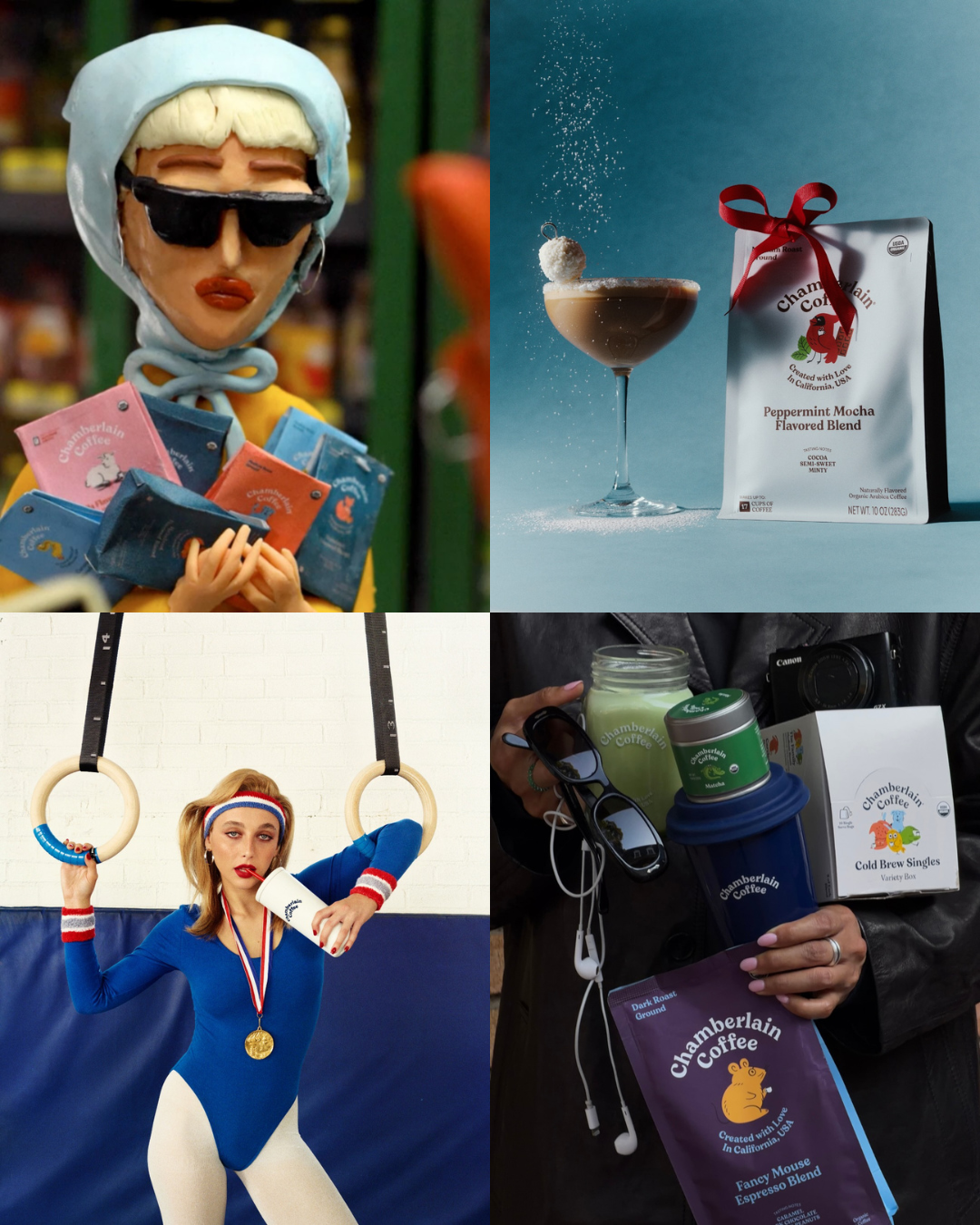
Images courtesy of Chamberlain Coffee
There are two ways to look at it.
On one hand, you can say their ever-changing imagery makes sense if they’re trying to keep up with the equally fast-changing moods and desires of social media audiences. You can say that it makes sense because that’s exactly what Emma’s own content mirrors.
However, from a marketing perspective, it doesn’t work.
In order for Chamberlain Coffee to be truly successful — and I’ll get into why it isn’t right now — she has to capture the attention of more than her existing fanbase.
During year 1, the brand generated $5 to $10 million in revenue. That’s a lot of money for sure, and any individual would be happy to make that much. Most businesses never generate that many sales ever, let alone in their first year.
But it’s not nearly enough to cover the overhead costs of the business. In 2024, the brand only improved sales year over year by $1 million to roughly $22 million — and operated at a loss for both her and the venture capitalists that invested over $19 million into the company.
Chamberlain Coffee was projected to earn $33 million in 2025, which would put it back in the black, but that hasn’t actually been confirmed to have happened.
Relying on her existing fanbase to generate such profits hasn’t worked and isn’t going to, especially if she continues to take a pause as a content creator, which limits her ability to expand her fanbase. What she and Chamberlain Coffee needs is to grow the brand’s customer base outside of just Emma Chamberlain fans and catch the attention of the average consumer.
What Needs To Happen Next
First and foremost, the brand needs to create a consistent marketing strategy. Those photoshoots are not cheap, and producing endless content that doesn’t lead to sales takes away from the bottom line.
The first step in producing better marketing starts with Emma.
While she garnered attention online for being not like other creators and expressing her creativity, she was very much still the norm: a minimalist makeup (if at all) wearing brown-haired girl with a ponytail. These days, Emma rocks a grunge, rockstar girlfriend look with a bleach blonde pixie to match.
That’s not relatable at all, nor is it very marketable. That’s clear to her current team as well and may explain the shift to claymation versions of Emma popping up on screens instead of the co-CEO herself.
She’s a core component of the brand’s success and marketing. And while it may not appeal to her, if she wants her namesake brand to reach its full potential, she needs to do both a personal rebrand and return to video content creation.
And as much as people might consider her to be the anti-influencer, that’s the kind of content the brand needs more of.
These highly stylized product shoots are beautiful, but they’re not something consumers can see and imagine becoming their life if they bought that bag of strawberry-flavored matcha.
What consumers want to see — and would make them want to buy more Chamberlain Coffee products — is the brand making it readily apparent how well their products fit into their everyday, messy, and imperfect lives. They can do this by producing more content like what they’ve already done on occasion, imagery that takes the brand from magazine to real life and matches both the online content and behavior of the audiences they’re trying to reach.

Images courtesy of Chamberlain Coffee
One step to making that happen is already underway. As I mentioned earlier, the brand is making its second foray into brick-and-mortar stores. They’re set to open a cafe on the iconic Abbot Kinney Boulevard in Los Angeles this year designed for people to linger — and probably take a lot of photos and videos.
That will naturally re-amplify consumer attention, take the brand from concept to real life, and lead to plenty of UGC content to pull from. The brand has a major opportunity to source content from brand fans and repost what they consider good enough with credit. This is a strategy that I’ve seen work over and over again in marketing and leads to people wanting to make more content in the hopes of being featured.
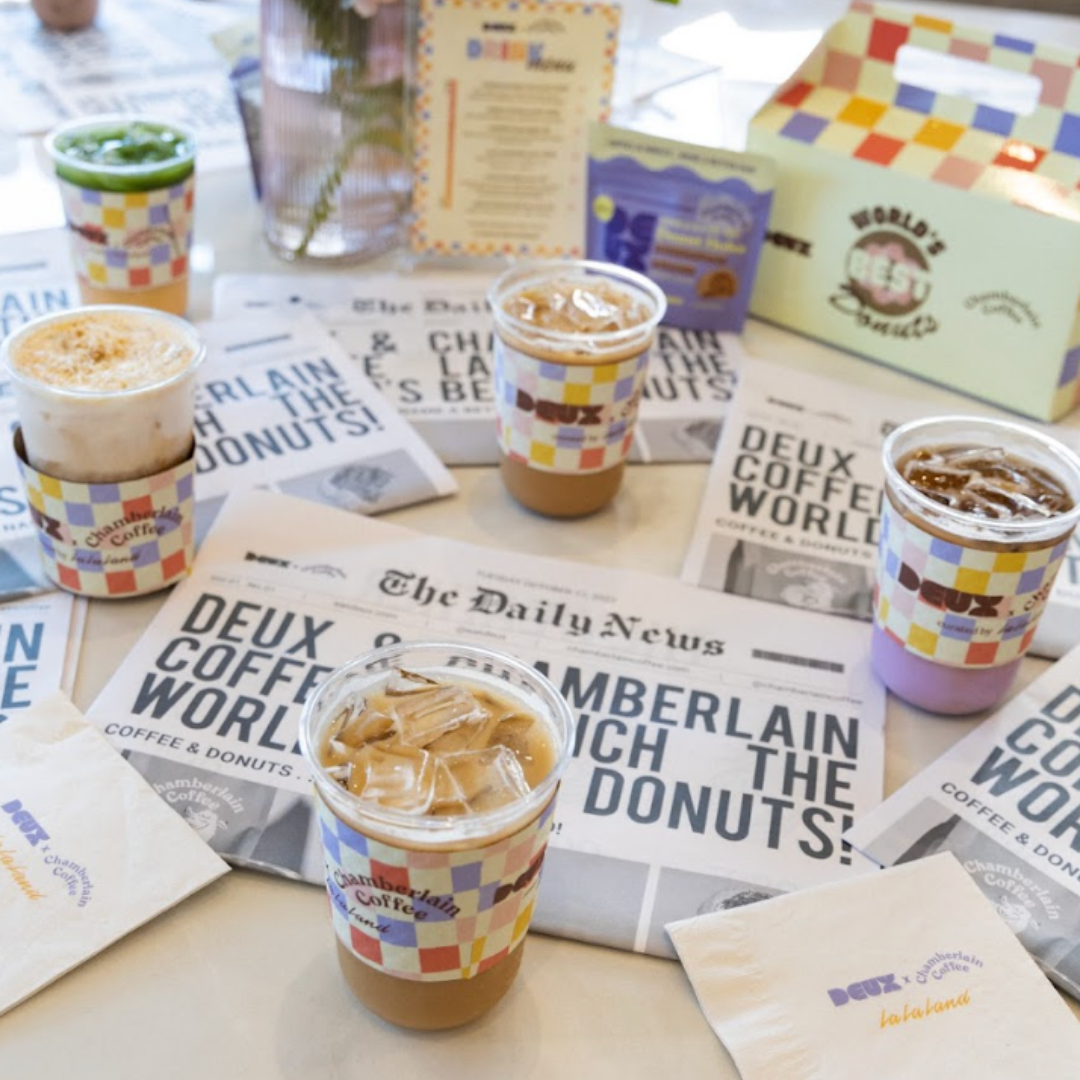
Image from the Chamberlain x DEUX popup with La La Land courtesy of Autumn Communications
Beyond that, they need to double down on brand partnerships and pop-ups in locales their only store won’t be in like New York, Chicago, and Miami. They’ve already successfully done so with their Chamberlain Coffee x DEUX cinnamon donut collab at La La Land cafe and month-long residency with cult favorite Alfred Coffee.
By being available where latte lovers who don’t already know the brand are, they have the chance to surprise and delight new customers with just how good their products really are (and I mean that, because I’ve gone out of my way to go to Target just to get their matcha mixes).
Long story short: Chamberlain Coffee and Emma Chamberlain have a lot of potential that I want to see them reach because I’m a fan. The vibes are right and the products are good, but that isn’t enough to build a successful brand. The good news is that while the company isn’t profitable yet, it can easily become so.